
The terroir
Belvedere di Suvereto.
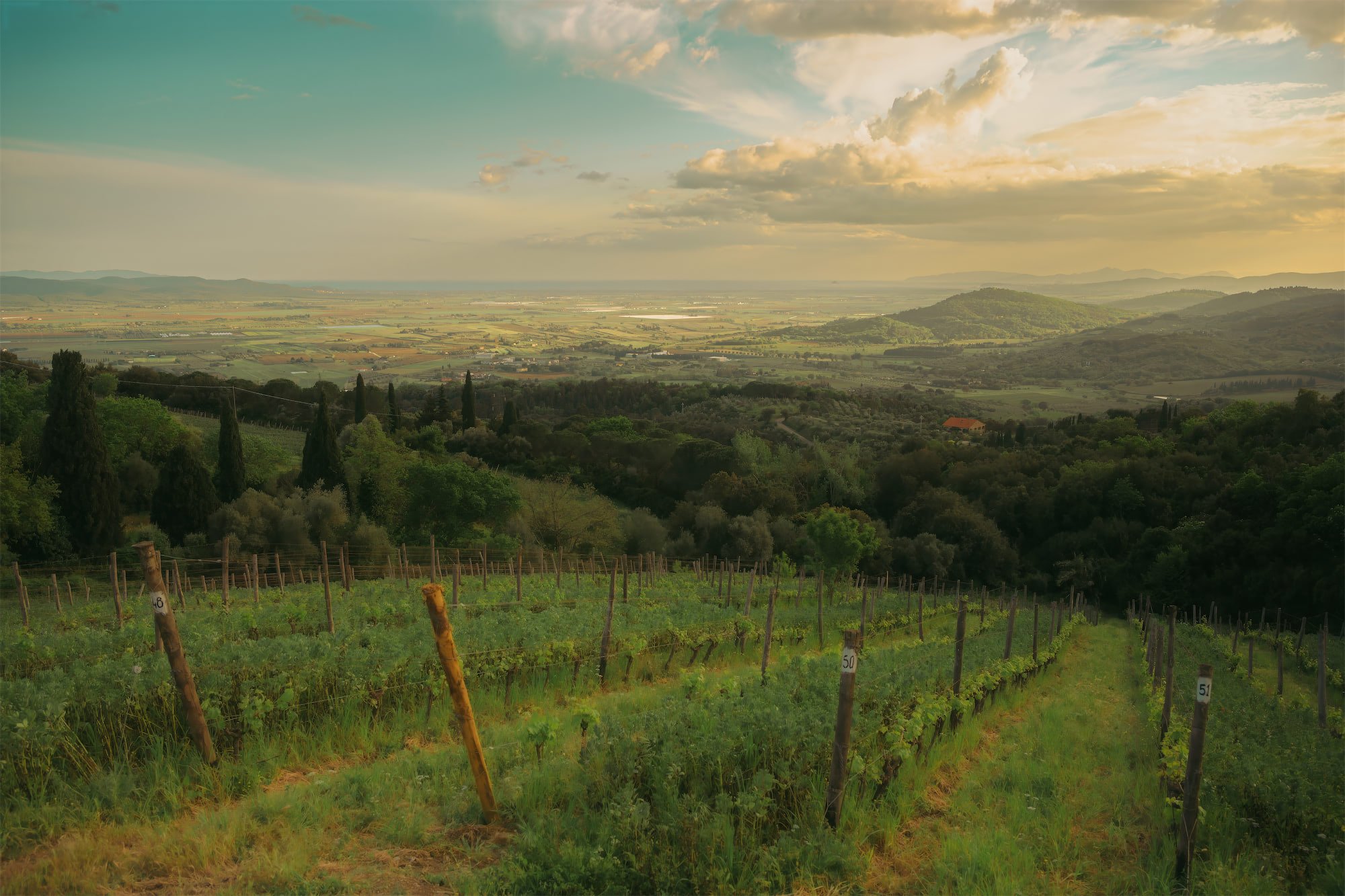
A ridge 300 metres above the sea, between the Colline Metallifere and the Tuscan Archipelago. Seven plots, two slopes, a microclimate that can’t be replicated.
Where we are
In the Val di Cornia, between sea and hills.
We sit in the Val di Cornia, at the far southern edge of the province of Livorno, where the Livorno Maremma meets the Grosseto one. Suvereto is one of Italy’s most beautiful villages, looking out over the Tuscan Archipelago and the Gulf of Follonica.
From April to October, the Val di Cornia is one of the driest areas in Italy. The westerly winds — Maestrale and Libeccio — blow in off the gulf. The island of Elba shields us from the sea currents, and on the clearest days you can even make out Montecristo. The light bouncing off the water gives the days a particular intensity, and the summer nights a coolness few coastal areas can offer.
Soil and biodiversity
A mineral land, ringed by the maquis.
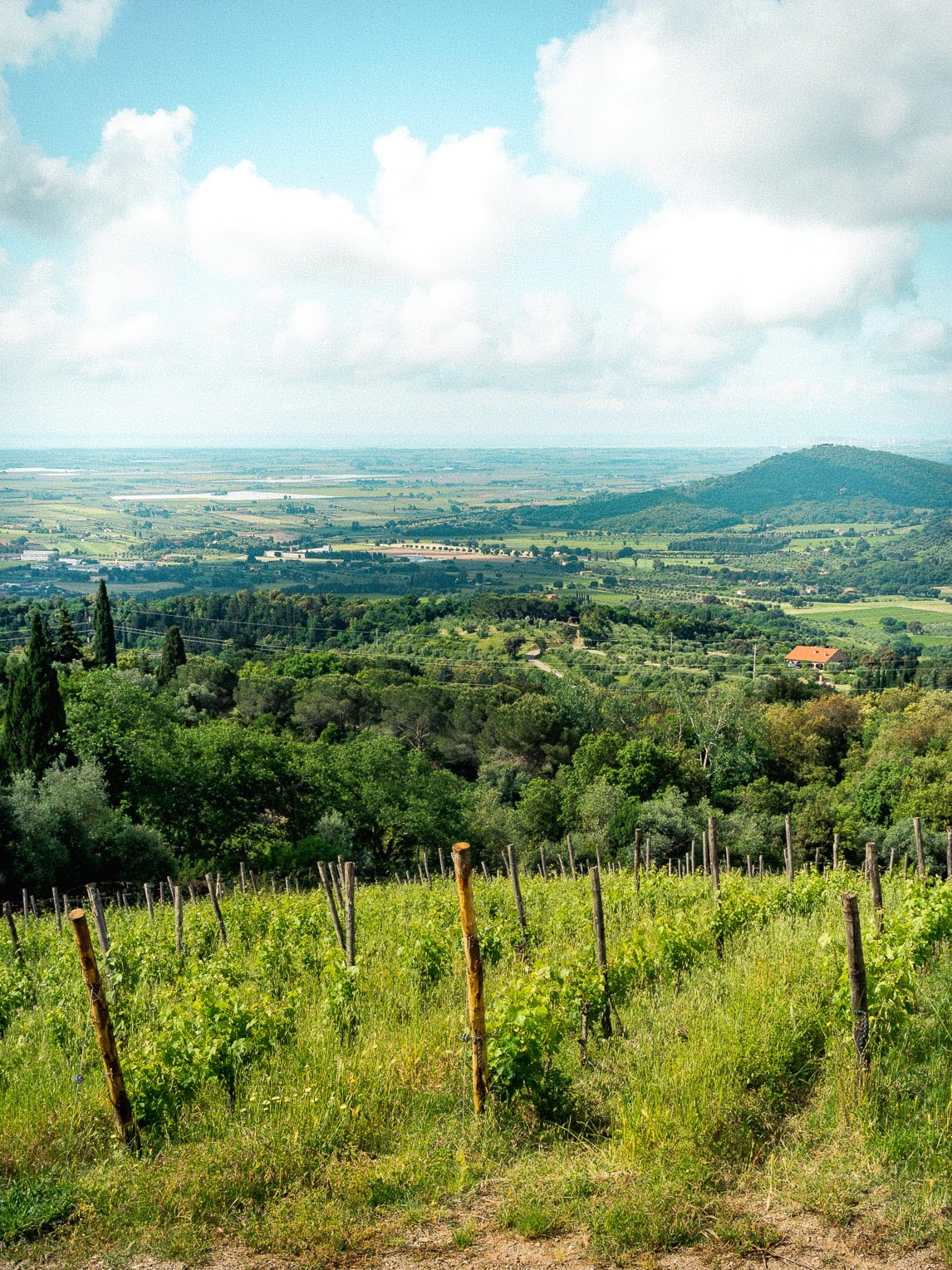
Our soils are made of schist and galestro rich in iron and manganese. Near the ridge the stony, skeletal component is strong; as you descend toward the valley, sand, clay and silt increase. Every plot has its own composition, microclimate, exposure and biodiversity — which is why each one is worked and vinified separately.
Around the vines, the Mediterranean maquis sets the frame: cork oaks, holm oaks, oaks, strawberry trees. And dozens of wild plants — thyme, savory, calendula, wild thyme, horsetail, mallow — that in spring we also gather for the table. This biodiversity is a habitat for insects and wildlife, a living part of the ecosystem we farm in.
Our vineyards
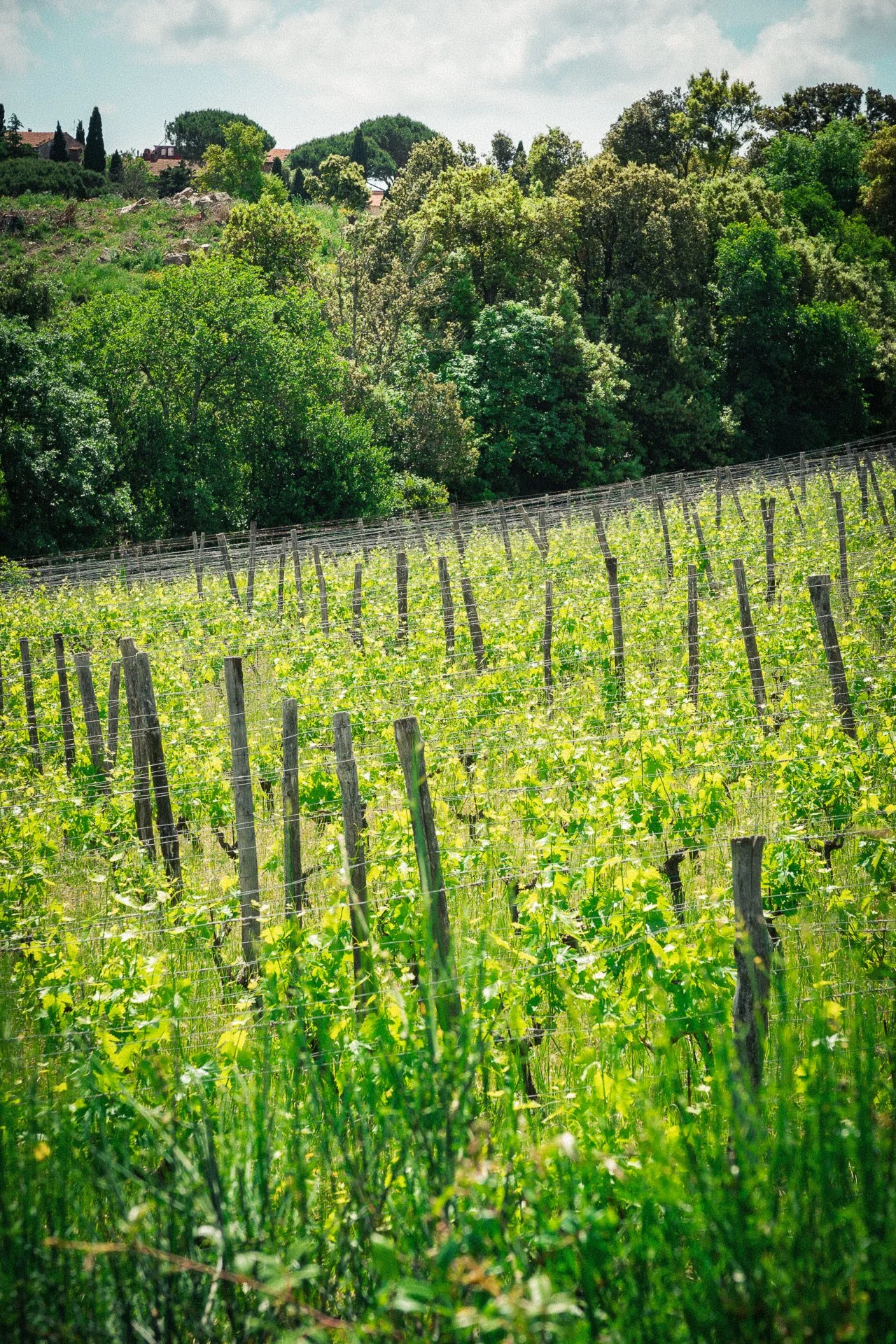
Seven plots, two slopes.
We sit on the ridge that acts as a watershed: to the north, toward the Colline Metallifere; to the south, toward the sea and the Tuscan Archipelago. Every plot is harvested and vinified separately.

I – IV · Colline Metallifere
North Slope
A. Vigna di Poggiocastello
North-west facing, gentle slope. Silty-sandy soil, no limestone.
B. Vigna di Giropoggio
Wrapped around the hill, following its natural contour — the exposure shifts from north-east to north. Stony soil with a strong clayey-schist component.
C. Vigna ai Maiali
North-west facing. Pale soil with a strong coarse-grained skeletal component.
D. Vigna alla Sughera
North-east facing, medium slope. Clay-silt soil.
V – VII · Arcipelago Toscano
South Slope
E. Vigna Nuova al Mare
South-west facing, steep slope. Sandy-based soil with a silty component (38% sand, 45% silt, 17% clay), slightly calcareous.
F. Vigna del Belvedere
The same clones as the north-facing plot. South-west facing, steep slope.
G. Vigna Vecchia al Mare
Gentle slope. 45% sand, 35% silt, 20% clay, high cation exchange capacity.
Crossings
Rooted, not closed off.
Suvereto is our home. But the cellar, inside, is like a small village: the place where grapes from different lands meet.

The cellar
A living place.
The yeasts that kick off our fermentations have lived here for years — in the air, in the tanks, in the wood. They set our own grapes in motion, and they do the same work when grapes arrive from elsewhere.
That’s how, in the bottle, distant lands come into contact.
The lands
From Pantelleria, from Pistoia, from Chianti.
From Pantelleria come the Moscato di Alessandria grapes we brought back in 2018, from a hectare of old, abandoned bush vines. They become Zino.
From Pistoia and Chianti come the grapes of Agricola 45, our parallel project: different lands, the same way of thinking.
The wine
Zino
Experiments
Working with the soil, not on top of it.
No certifications, just practices. What we do in the vineyard to keep the land alive, year after year.
Syntropic farming
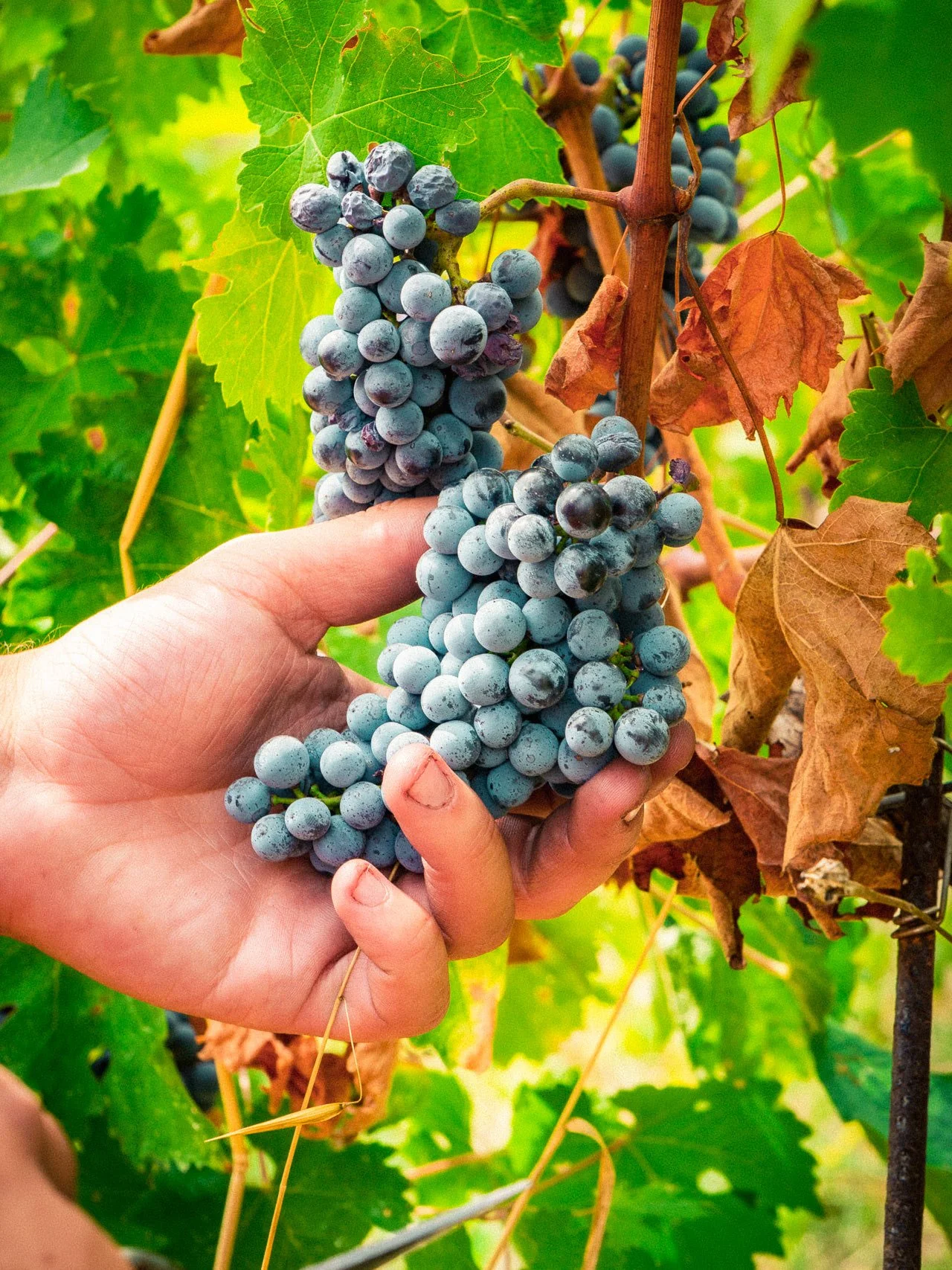
Vines, almond trees and Mediterranean maquis on the same row. Each plant feeds the next, like a forest growing on its own.
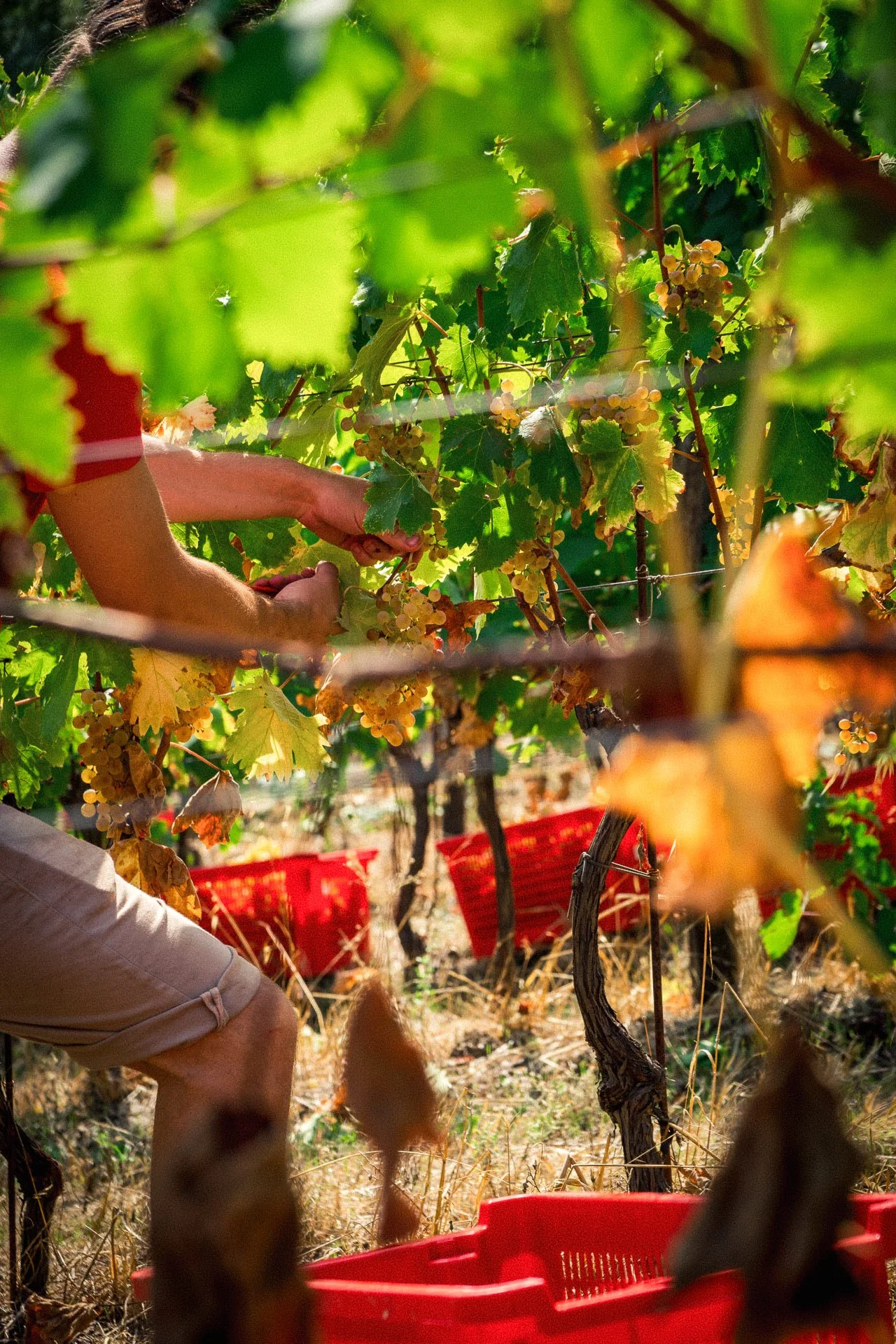
Field preparations
Horn manure, horn silica, chamomile and nettle preparations. A lunar calendar to choose when to work.
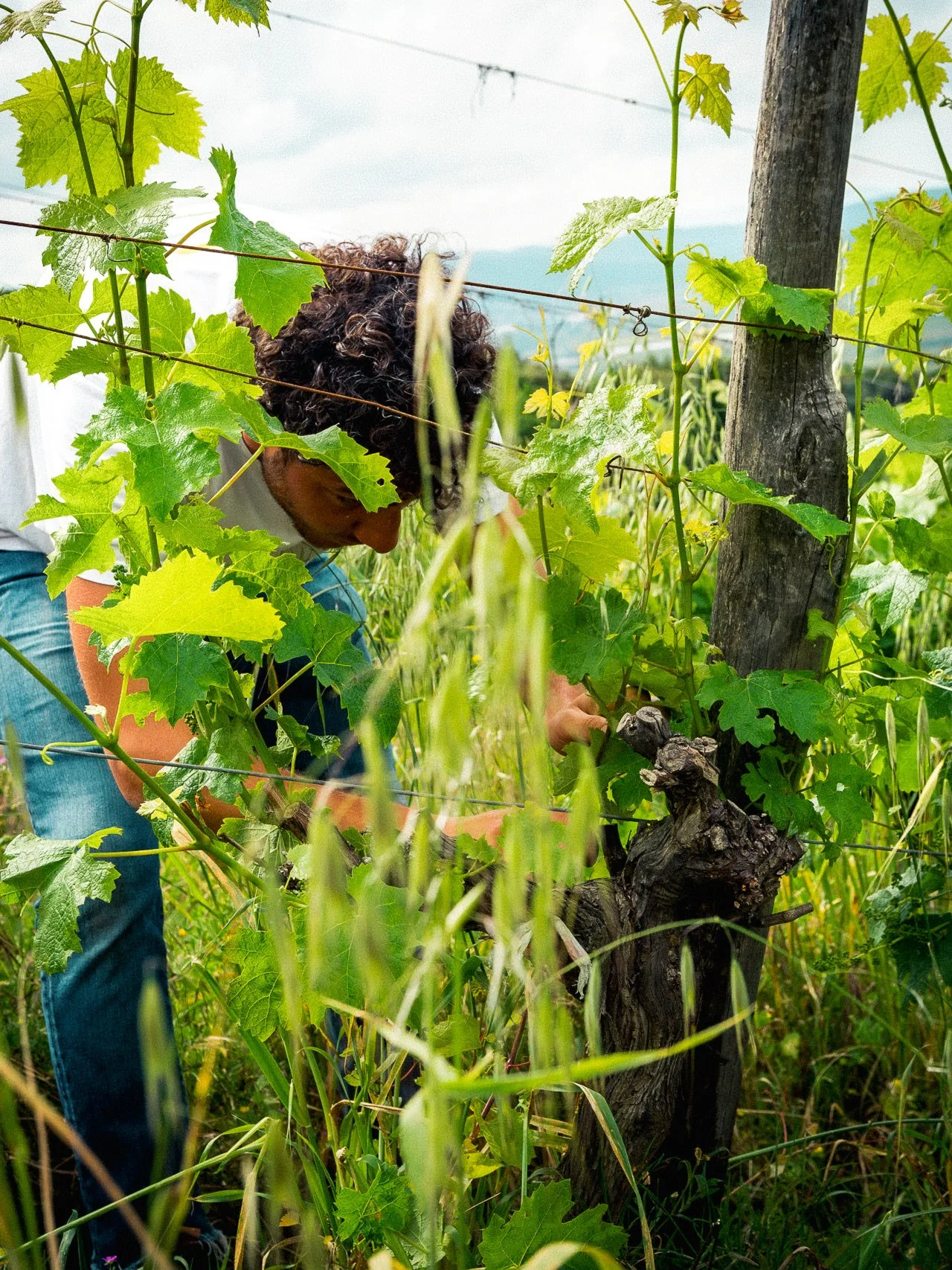
The married vine
Almond trees come up on their own between the rows. At pruning time we tie the vines to their trunks, the way the old farmers did.